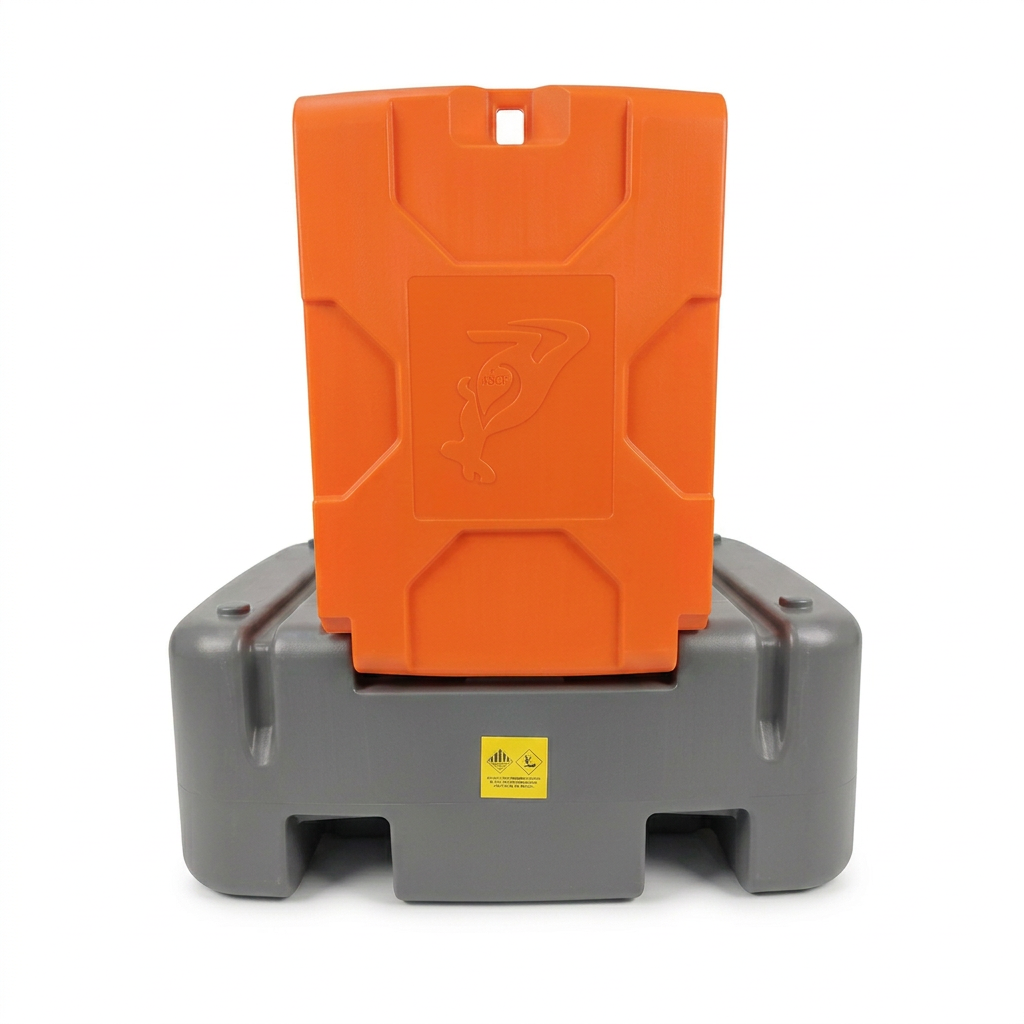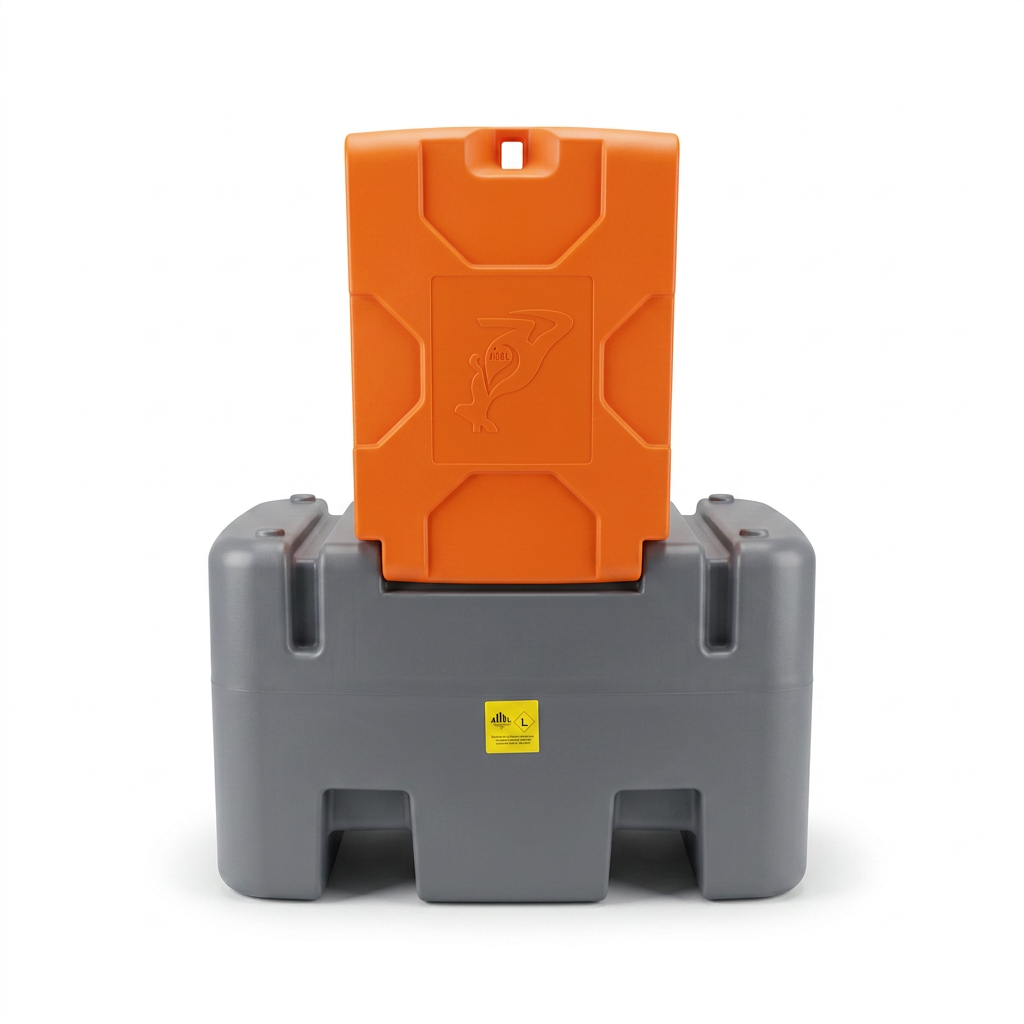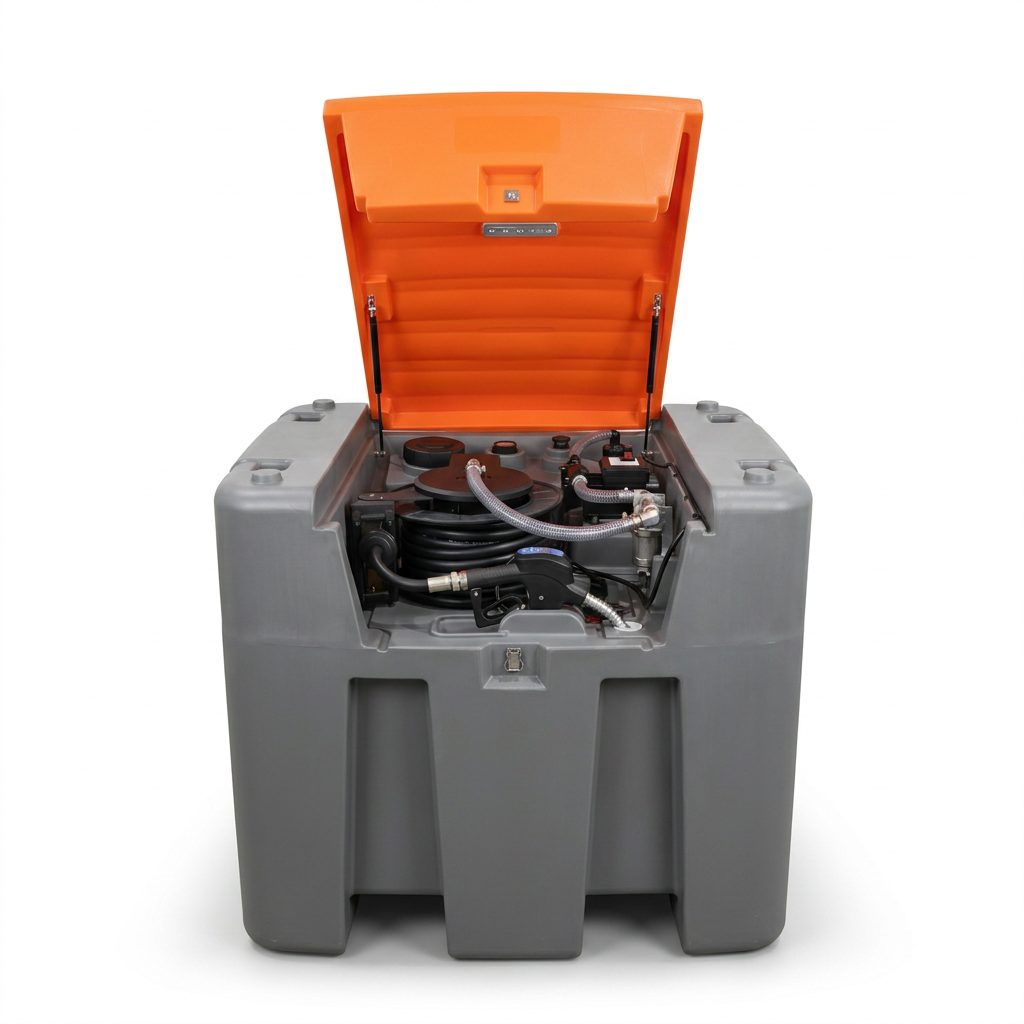
A portable diesel tank is one of those purchases where the wrong call costs you for years — undersized and you're filling weekly, oversized and you're hauling dead weight. This guide walks through the five things that actually matter when buying a portable diesel fuel tank in Australia: capacity, pump flow rate, build quality, regulations, and the support behind the tank. New to the term? Start with what is a fuel pod.
Start with capacity, not price
Capacity drives everything else. Match it to a realistic refuelling cycle — how much fuel do you burn per week, and how often do you want to top up?
200–250 L — single ute, weekend farm, small landscaping crew. Sits in a ute tray, fills a 100 L vehicle tank twice over.
400 L — the sweet spot for most small fleets, family farms and trade crews. Big enough to skip mid-week refills, small enough to stay portable.
1,000 L — civil sites, mining support, large-scale farming, fleet depots. Almost always set up with a hose reel and water separator.
If you're between sizes, go bigger. Diesel doesn't go off quickly when stored properly, and a half-full 1000L tank is cheaper to operate than a full 400L tank you keep refilling.
Pump flow rate (LPM) — what actually matters
Pump flow rate is measured in litres per minute (LPM). The Australian portable market typically ships with 40 LPM (entry/mid) or 56 LPM (heavy-duty) 12V diesel pumps.
40 LPM is fine for refuelling vehicles and small machinery — a 100 L ute tank goes from empty to full in around 2.5 minutes. Joey's 210L and 400L tanks ship at this rate.
56 LPM is what you want on a 1,000 L tank where you're filling larger equipment and benefit from a hose reel — see the 1000L Diesel Transfer Tank with Hose Reel.
Higher LPM also means the pump is working less hard for the same fuel volume, which extends pump life. Don't skimp.
Build, fittings and the bits that fail first
Pump motor, nozzle and hose fittings are where cheap tanks fall apart. Look for:
Automatic shut-off nozzle — prevents overfill spills. Bonus if it has a digital flow-read bowser so you know exactly how much you transferred.
Heavy-walled hose with swivel and crimped fittings — 3/4 inch is the workshop standard for transfer applications. 4 m minimum length so you can reach the vehicle without dragging the tank.
Pad-lockable lid or filling cap — fuel theft is the most common loss reported on remote sites. A $5 padlock saves $200 of diesel.
Water separator and air breather on larger tanks — diesel attracts moisture, and a separator stops you injecting water into a $200k header.
Integrated LED light — sounds like a gimmick until you're refuelling at 5 a.m. in winter.
Regulations and what your insurer expects
Portable diesel storage in Australia is generally referenced against industry guidance for flammable and combustible liquids. Diesel is classed as a combustible liquid (flash point above 60°C), so it carries lighter handling obligations than petrol — but it's still your responsibility, as the operator, to confirm what applies to your site, fleet and insurance policy.
Practical good practice: tanks should have proper venting, sit on stable ground when in use, be kept clear of ignition sources, and be locked when unattended. Joey does not issue regulatory certification — keep records of your own site assessment with your asset files, and check your insurer's specific requirements.
For transport on Australian roads, diesel in typical portable volumes is generally outside full ADG (Australian Dangerous Goods) placarding requirements, but rules vary by state and quantity. Always check current state regulations and your transport policy before moving fuel.
Warranty and Australian support
A portable diesel tank that lives in the back of a ute or sits in a paddock gets hammered. The cheapest tanks come with a 6-month warranty and overseas-only parts support — when the pump fails, you wait three weeks for a replacement and your fleet is down.
Look for tanks with a minimum 12-month manufacturer warranty, Australian-based support, and stocked replacement parts (pumps, nozzles, hoses) shipped from a local warehouse.
Joey ships every tank with a 12-month warranty and stocks spares for Australia-wide dispatch — usually next-business-day to capitals.
Frequently asked questions
Ready to spec the right tank?
Browse the Joey diesel range, or call 0468 462 047 — we'll talk you through capacity, freight and lead time in 5 minutes.