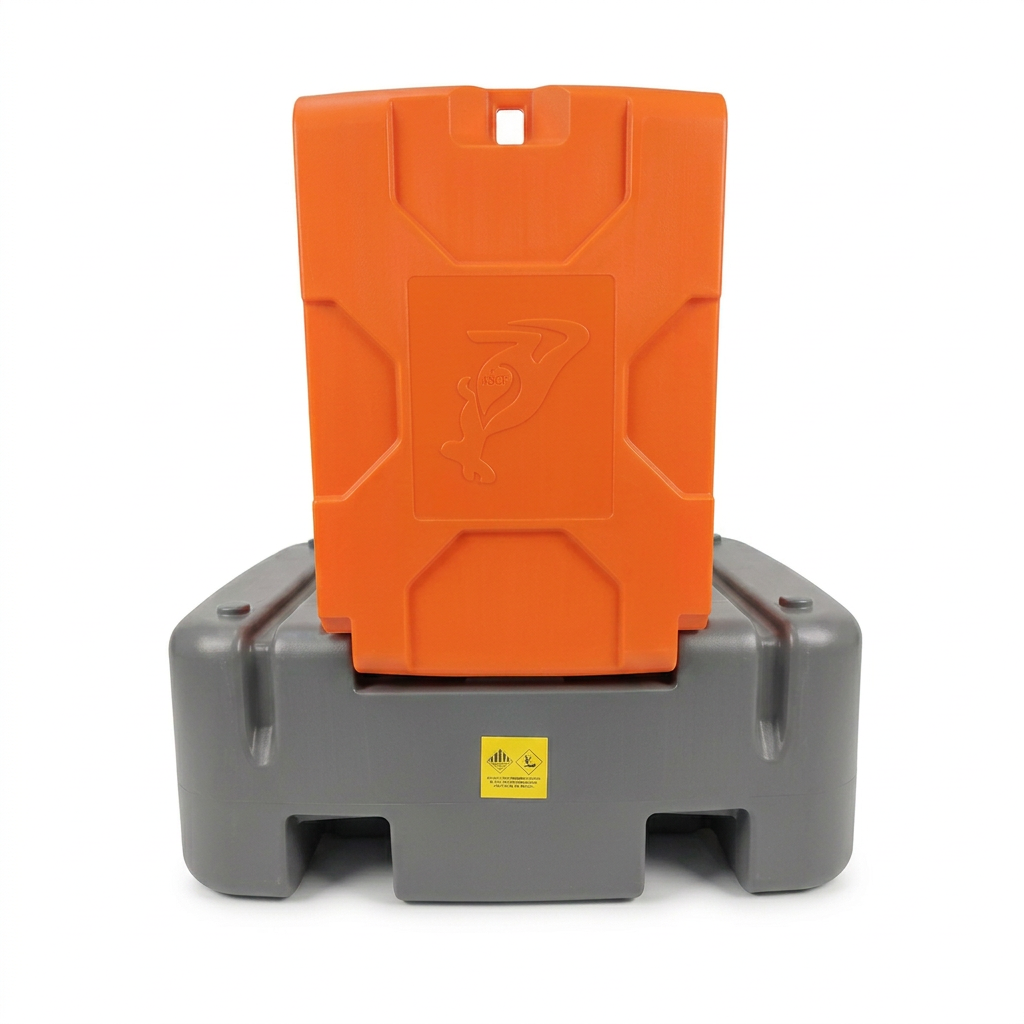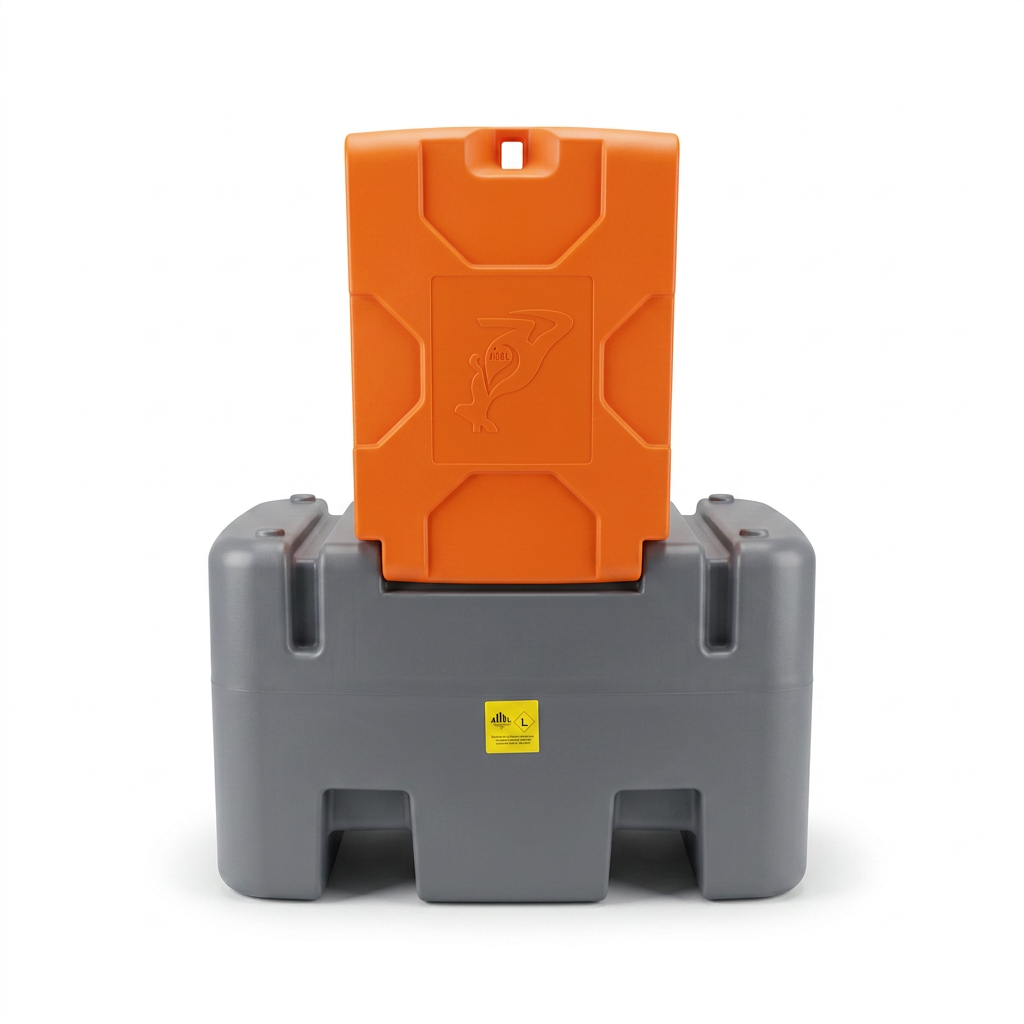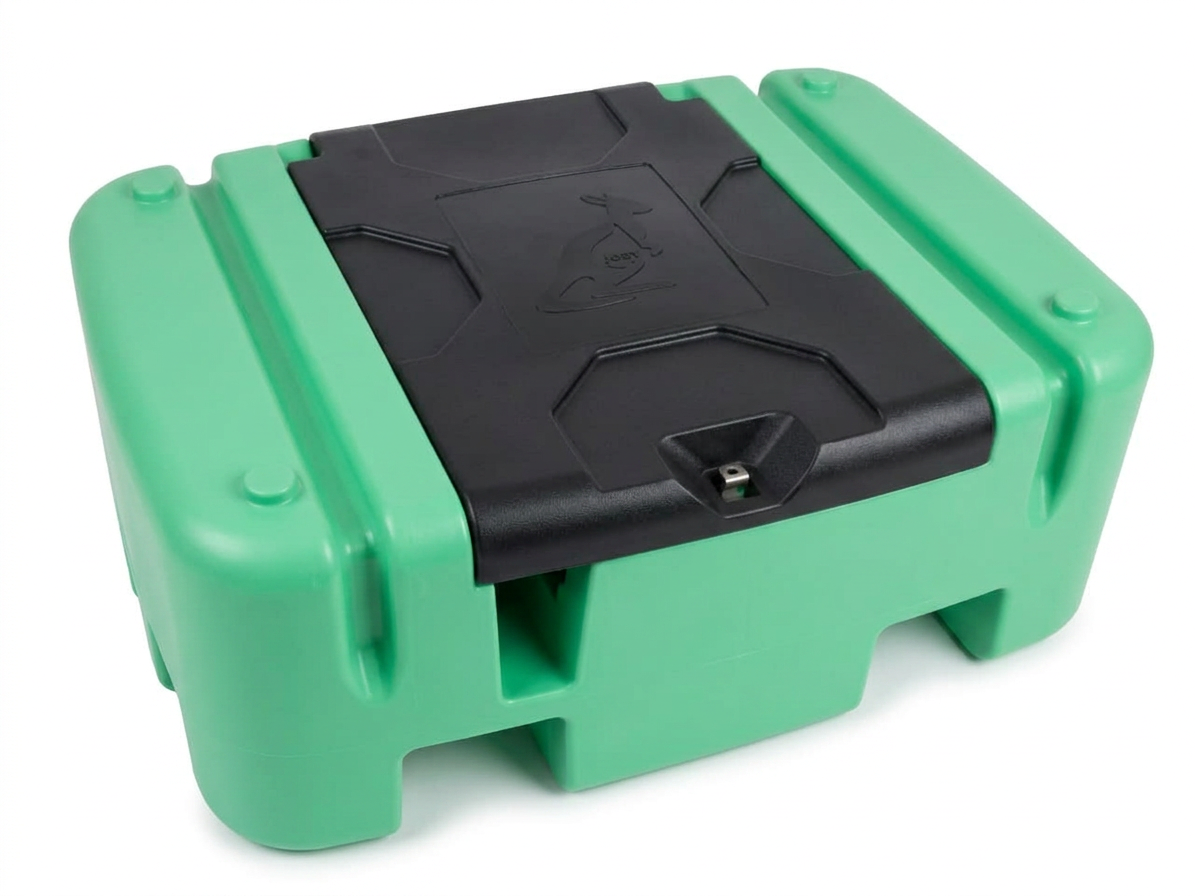
If you're refuelling utes, tractors, generators, boats or worksite gear, the choice between a diesel transfer tank and a petrol transfer tank isn't just about what fuel you burn — it changes the pump, the venting, the safety gear, and how the tank can legally be transported in Australia. Here's the plain-English breakdown, plus the spec callouts that actually matter when you're standing in the shed deciding what to order.
Jump to a tank
210L Diesel Fuel Pod
Ute / single-vehicle · 40 LPM 12V
400L Diesel Fuel Pod
Small fleet / farm · 40 LPM 12V
1000L Diesel Fuel Pod
Depot / civil / mining · 56 LPM + hose reel
210L Petrol Fuel Pod
Landscaping / marine · 57 LPM petrol-rated
330L Petrol Fuel Pod
Larger petrol operation · 57 LPM petrol-rated
Browse all diesel tanks or petrol tanks.
The short answer
Pick diesel if you're refuelling diesel utes, tractors, headers, generators, excavators, or any modern Aussie work fleet. Diesel is the default for portable bulk refuelling — slower-burning, much lower vapour pressure, and far easier to store and transport safely.
Pick petrol only if you specifically need to refuel petrol-only equipment — landscaping crews running 2-stroke gear, motorsport pits, marine outboards, or chainsaw/whipper-snipper fleets. Petrol tanks are built tougher (vapour control, earthing, sealed pumps) and cost more because they have to be.
Almost everyone refuelling work vehicles in Australia ends up on diesel. The exceptions are small but real — and getting the wrong tank for petrol service is a genuine safety hazard, not just a warranty issue.
Pump and flow rate
Diesel pumps in portable tanks typically run 40–56 LPM at 12V. At nominal flow, 100L takes about 2.5 minutes at 40 LPM or 1.8 minutes at 56 LPM. Joey's 210L Diesel Transfer Tank uses a 40 LPM 12V pump; the 1000L Diesel Tank with Hose Reel runs 56 LPM with optional 230V mains.
Petrol pumps run faster — typically 57 LPM — but every component in the fuel path has to be petrol-rated: explosion-proof motor housing, vapour-tight seals, anti-static hose. That's why Joey's 210L Petrol Fuel Pod and 330L Petrol Fuel Pod carry a premium over equivalent diesel units.
Don't be tempted to put petrol through a diesel pump or vice versa. The seals aren't compatible, the motor isn't rated for petrol vapour, and you'll either kill the pump or start a fire.
Safety, venting and regulations
Diesel has a flash point above 60°C, which is why it's classified as a Combustible Liquid (Class C1) in Australia rather than a Dangerous Good for transport in modest quantities. Petrol's flash point is around −40°C, putting it in UN1203 Class 3 Packing Group II — Flammable Liquid territory, with proper ADG (Australian Dangerous Goods) code obligations for transport in larger volumes.
Practically, a portable diesel tank under 1,000L is generally carried on a ute or trailer with minimal paperwork. A petrol tank of the same capacity typically needs anti-static earthing, dedicated venting/breather, sealed lid, and you'll need to mind ADG limits and placarding rules above the threshold. Compliance with Australian Standards and state regulations is the operator's responsibility — Joey does not provide regulatory certification, so confirm your situation with your insurer and the current rules in your state.
Both tank types should be lockable. Both should sit on a stable, level surface during refuelling. Neither should be near ignition sources, and you should always have a dry-chemical extinguisher within arm's reach.
Cost and total spend
Like-for-like, expect a petrol transfer tank to cost 15–25% more than a diesel tank of the same capacity. That's the cost of explosion-proof components, not a markup.
Diesel tanks also win on operating cost: fuel itself is cheaper per litre for fleet refuelling, equipment runs longer between refills, and the tanks are simpler to service. If your fleet is mixed, most owners buy a larger diesel tank as the primary unit and keep a smaller petrol tank for the 2-stroke gear.
Quick comparison table
| Factor | Diesel Tank | Petrol Tank |
|---|---|---|
| Typical 12V pump flow | 40–56 LPM | 57 LPM |
| Flash point | > 60 °C (Combustible) | ≈ −40 °C (Flammable, Class 3) |
| Transport regs (AU) | Light — minimal paperwork < 1,000 L | ADG-controlled, earthing required |
| Pump cost driver | Standard 12V DC motor | Vapour-tight, explosion-proof |
| Typical buyer | Farms, civil, fleets, mining support | Landscaping, motorsport, marine |
| Price (like-for-like) | Base reference | +15–25% |
What Aussies actually search for (and what they mean)
Search terms vary state to state, but the intent is the same — people want a portable fuel tank for a ute, trailer or worksite. The most common Australian phrases we see: diesel fuel pod, ute diesel tank, 200L diesel tank with pump, portable diesel tank Australia, 1000L diesel transfer tank, 12V diesel pump tank, petrol jerry tank, portable petrol tank for mower, 200L petrol tank with pump, diesel tank for farm ute, mine spec diesel tank.
State-by-state considerations (AU)
Storage and transport rules sit with each state and territory regulator. Joey doesn't hold accreditation under AS 1940, UN or ADG, and we don't certify your setup — you (or your safety advisor) need to confirm the current rules with the relevant authority. The notes below are a starting point only.
NSW — SafeWork NSW oversees dangerous goods storage; EPA NSW covers transport. Portable diesel under 1,000 L on a work ute is generally straightforward; petrol above placarding thresholds needs ADG paperwork.
VIC — WorkSafe Victoria and EPA Victoria. Similar pattern: diesel is lighter touch, petrol over threshold quantities triggers DG transport obligations.
QLD — Department of Resources (DG storage) and TMR (transport). Mine sites and CSG/coal regions often have site-specific specs (lockable, bunded, earthing) on top of state rules.
WA — DMIRS (Dangerous Goods Safety Act 2004). Pastoral and mining operators usually have internal DG procedures that go beyond the minimum — check the site induction before turning up with a tank.
SA, TAS, NT, ACT — SafeWork SA, WorkSafe Tasmania, NT WorkSafe and WorkSafe ACT each administer the equivalent DG legislation. Same principle: diesel light, petrol controlled.
Across every state, the practical checklist is the same: stable mounting, lockable lid/pump, separation from ignition sources, an extinguisher on hand, and a bunded surface if you're storing rather than just transporting.
Which Joey tank fits which job?
Single ute, weekend farm, contractor — 210L Diesel Fuel Pod. Fits in a tray, 40 LPM 12V pump, lockable.
Small fleet, family farm, civil crew — 400L Diesel Fuel Pod. The sweet-spot capacity, still ute-portable.
Depot, large farm, civil/mining support — 1000L Diesel Fuel Pod with Hose Reel. 56 LPM 12V, optional 230V mains.
Landscaping crew, motorsport pit, marine — 210L Petrol Fuel Pod. 57 LPM petrol-rated pump, anti-static hose.
Larger petrol operation — 330L Petrol Fuel Pod. Same petrol-rated build, bigger reserve.
For petrol sizes, pump inclusions and tray fit, read petrol fuel pods explained.
Still unsure? Read the companion guide on 210L vs 400L vs 1000L diesel, or the safe diesel transfer guide.
Frequently asked questions
Not sure which capacity to grab?
Most fleets land on the 400L diesel for the right mix of capacity and portability. Have a look or give us a call — we'll match the tank to your kit.